
Angkor Centre for Conservation of Biodiversity
Angkor Centre for Conservation of Biodiversity
Pileated gibbon
The Pileated gibbon (Hylobates pileatus) is a primate in the gibbon family, Hylobatidae.
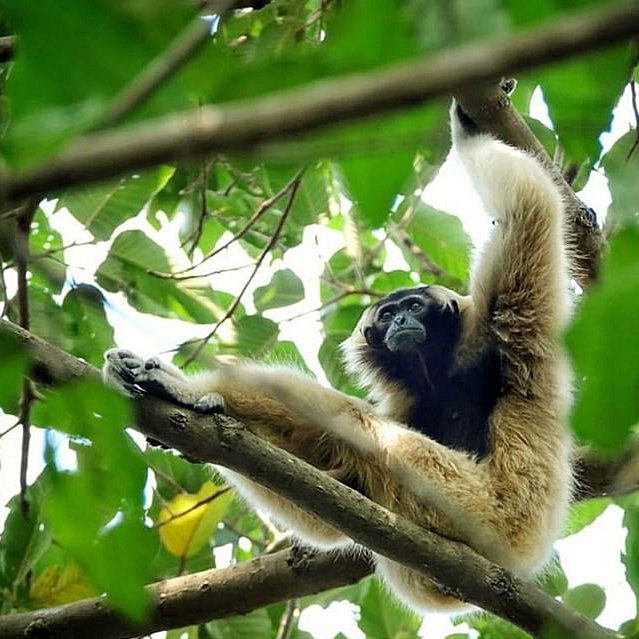
The pileated gibbon has sexual dimorphism in fur coloration: males have purely black fur, while females have white-grey fur with only the belly and head black. The white and often shaggy hair ring around the head is common to both sexes.
The species has been identified as endangered and is listed in CITES Appendix I. Their main threat is habitat destruction, with the natural forest they live in being converted into farmland. This has led to local extinction in some areas. Also, like many other primate species, they are hunted and captured for meat and sold into wildlife smuggling. Many attempts have been made to survey and increase the species' numbers, both concerning their status in the wild, and in zoos.
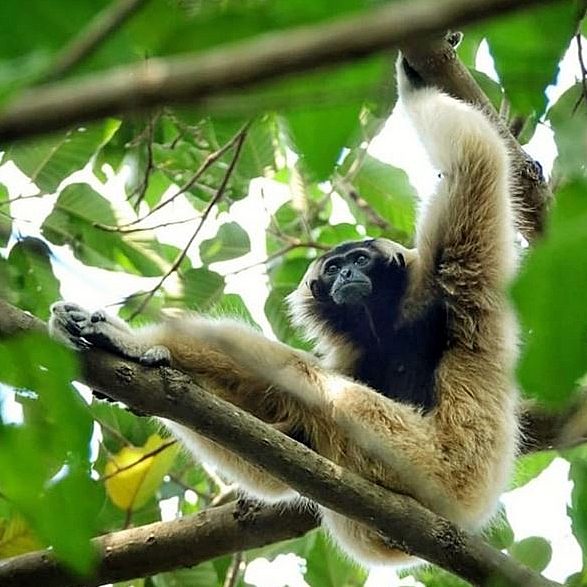
In 2013, Alina, a young female Pileated Gibbon, came to the ACCB, the Cambodian wildlife conservation center of the Allwetterzoo Münster. This was the beginning of a special story that found its temporary high point in February 2024 with the birth of a baby from these endangered animals.
Rescued from the Illegal Wildlife Trade
When Alina was rescued from the illegal trade, she had already spent most of her life in captivity. Our experts considered it too risky to simply reintroduce her into the wild. They were worried that she wouldn't be able to live independently in the forest. But there was hope…
Towards the end of 2021, a regular visitor started coming to the Angkor Centre for Conservation of Biodiversity (ACCB), always seeking out Alina, the ACCB team recalls. The visitor was a wild male Pileated Gibbon (Hylobates pileatus). Over the months, the two were able to form a strong bond through (or despite) the enclosure. The ACCB team repeatedly observed them grooming each other, sharing food, and singing duets together.
The Enclosure Doors Were Opened
These observations gave the conservationists hope that Alina might learn more from her wild admirer, and that reintroduction might be possible after all. A lot of planning and discussion went into what would need to be done to ensure Alina's survival. The result of the discussions was that the door of her enclosure was opened to the surrounding forest. This gave Alina the freedom to come and go as she pleased.
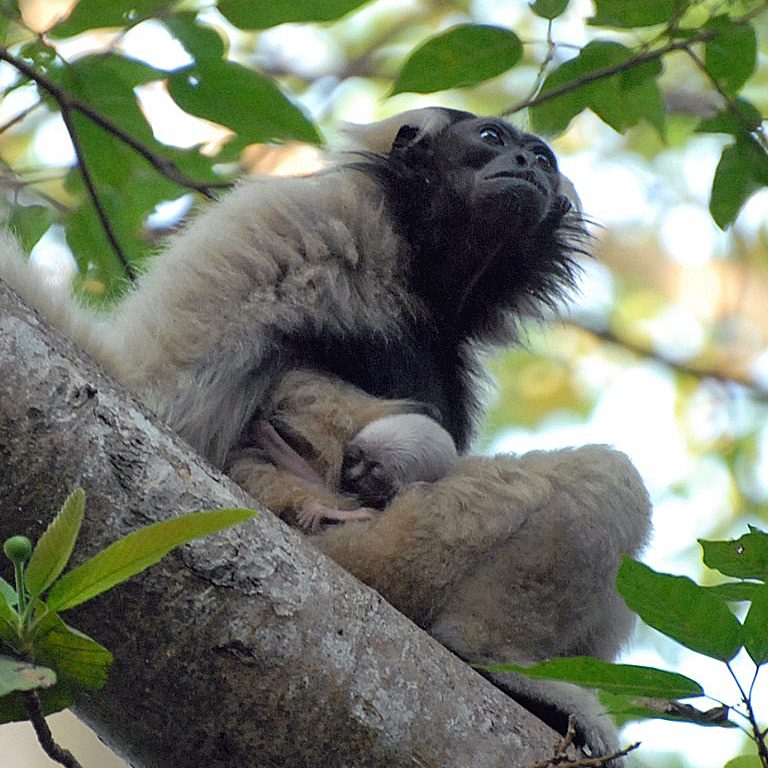
In the first few weeks, she stayed in her old enclosure, where she seemed most comfortable. But over time, the ACCB team observed her following the wild male into the forest more and more often—and not only that. She began to feed on what the forest offered her: leaves and wild fruits. However, the ACCB team continued to provide her with additional food. But the intervals in which Alina returned to the ACCB became longer and longer.
The Animal Becomes More and More Independent
Over the past two years, Alina has become accustomed to life in the national park. The pair could still be observed and, in particular, heard in the canopy above the ACCB. Their melodic pair songs can be heard for long distances from deep within the national park all the way to the ACCB.
Challenges for the Offspring
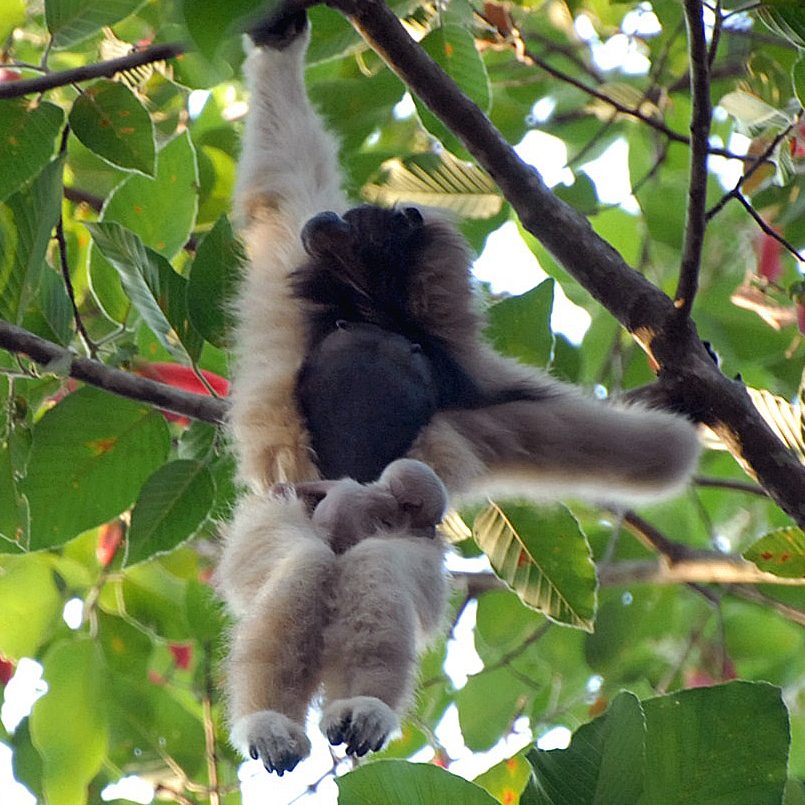
In December 2023, there were the first signs that Alina was pregnant. Her first offspring was born shortly after. All team members are very happy about this success. However, some worries remain, as the real challenges are still ahead for Alina.
Pileated Gibbon young typically stay with their mother until the age of two and in the family group until they reach sexual maturity at five to eight years old. In these years, they learn a lot from their parents, especially how to raise young. But Alina has no experience with this herself, which means she must raise the baby instinctively. Therefore, the ACCB team will continue to observe, support, and offer food to the three of them.
Wir benötigen Ihre Zustimmung zum Laden der Übersetzungen
Wir nutzen einen Drittanbieter-Service, um den Inhalt der Website zu übersetzen, der möglicherweise Daten über Ihre Aktivitäten sammelt. Bitte überprüfen Sie die Details in der Datenschutzerklärung und akzeptieren Sie den Dienst, um die Übersetzungen zu sehen.