Angkor Centre for Conservation of Biodiversity
Angkor Centre for Conservation of Biodiversity
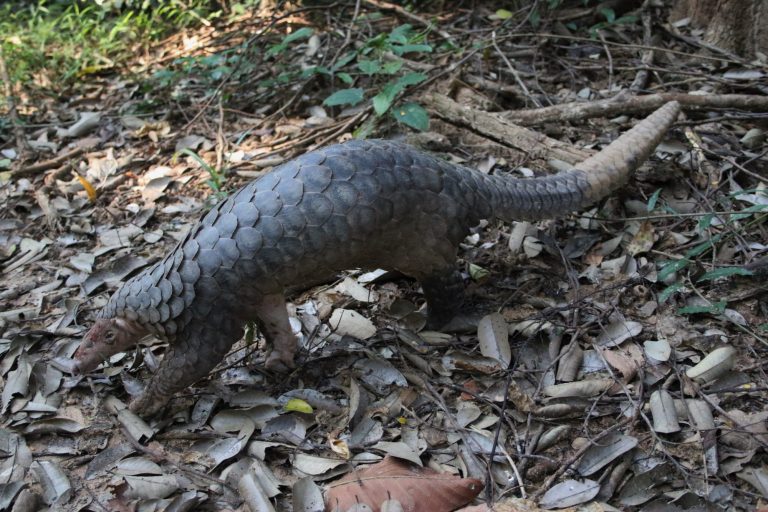
Sunda pangolin
The Sunda pangolin (Manis javanica), also known as the Malayan or Javan pangolin, is a species of pangolin. It is a member of the Manidae family. Its English name comes from the Malay name "pëngulin", which means "roller".
It is native to Southeast Asia, including Myanmar, Thailand, Cambodia, Laos, Malaysia, Singapore, Vietnam, and the islands of Borneo, Java, Sumatra and the Lesser Sunda Islands. It prefers forested primary, secondary and scrub forest habitats, but also lives in rubber and palm oil plantations. It is largely arboreal.
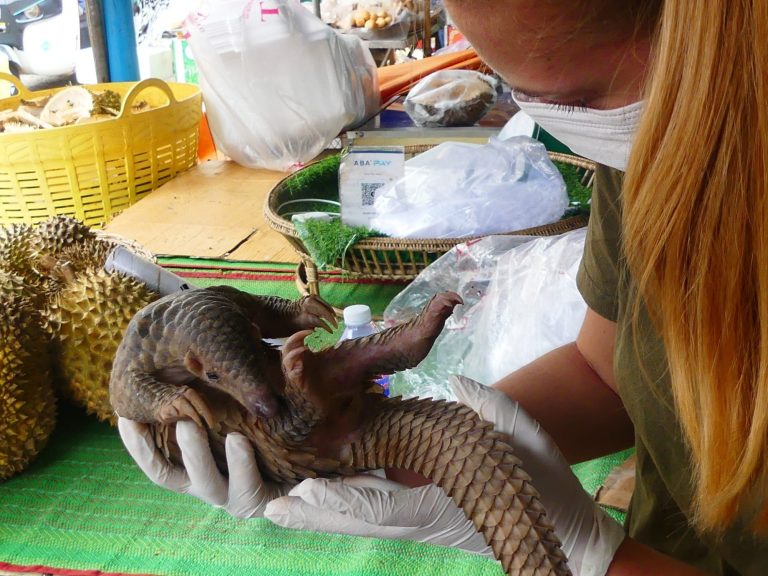
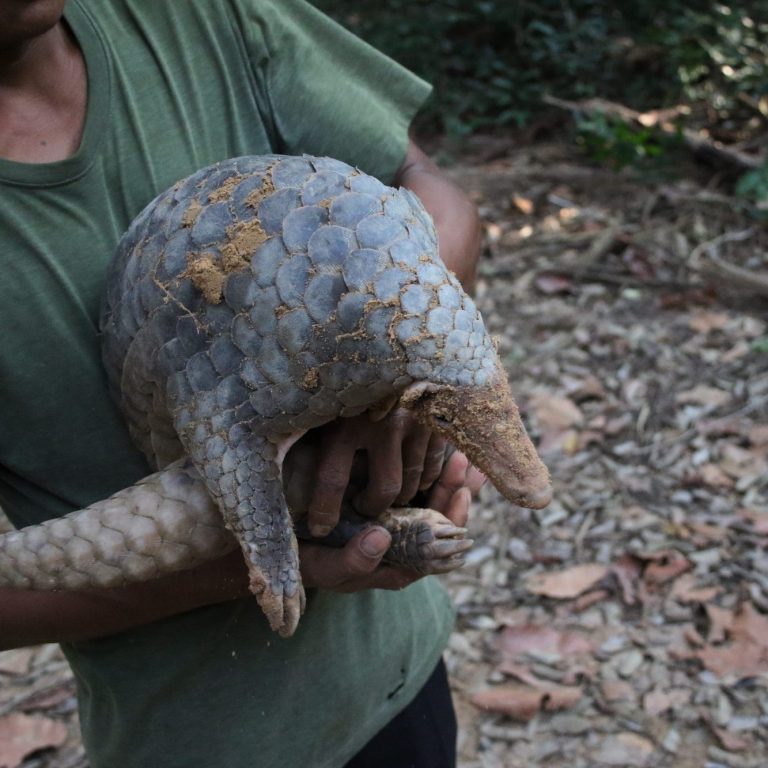
We were recently called by a concerned member of the public, who had found a small pangolin running down a busy road in Siem Reap outside a market. Due to its location, it is highly suspected that this animal escaped from a trader within the market. Luckily, the kind caller picked the animal up, and kept it safe at her durian stall until we could get there.
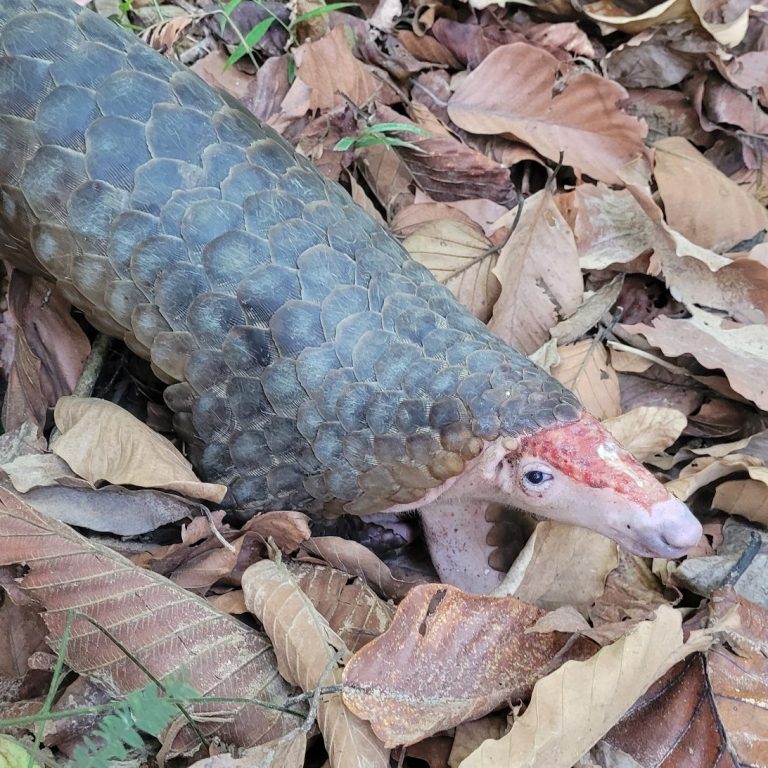
On arrival, it was obvious to our team that the pangolin was very young, and had perhaps only just been separated from her mother. She was also suffering from an ulcerated eye, likely caused by a traumatic injury - this is also likely a result of the terrible conditions she would have been exposed to when being poached from the wild and held in the illegal wildlife trade. She would not have survived in the busy streets by herself, so we were exceptionally grateful for the finders getting her to safety.
We named her “Tou-ren” - which means Durian in Khmer. She was taken back to our specialist facility at ACCB and given medical treatment for her eye, and lots of tasty ants for dinner!
An injured Malayan pangolin has been cared for at the Cambodian Species Conservation Center at the Allwetterzoo after being rescued by local residents. It is currently listed as critically endangered (CR) by the IUCN.
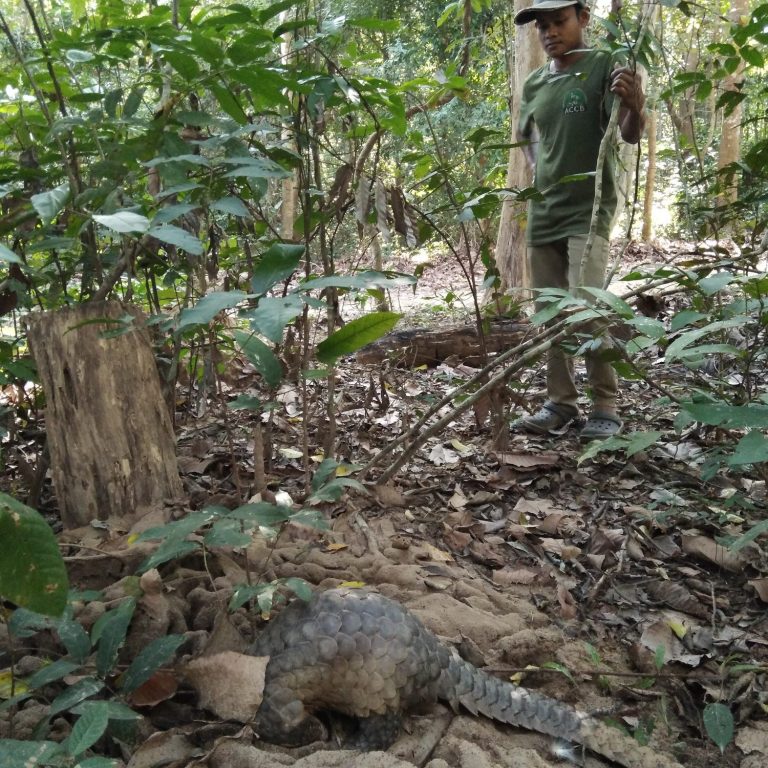
At the ACCB (Angkor Centre for Conservation of Biodiversity), the team is treating the animal's injuries and getting it fit for outdoor recreation. This includes daily walks. These help the animal rebuild muscle and be strong enough to survive after its release.
Wir benötigen Ihre Zustimmung zum Laden der Übersetzungen
Wir nutzen einen Drittanbieter-Service, um den Inhalt der Website zu übersetzen, der möglicherweise Daten über Ihre Aktivitäten sammelt. Bitte überprüfen Sie die Details in der Datenschutzerklärung und akzeptieren Sie den Dienst, um die Übersetzungen zu sehen.