
Angkor Centre for Conservation of Biodiversity
Angkor Centre for Conservation of Biodiversity
Giant ibis
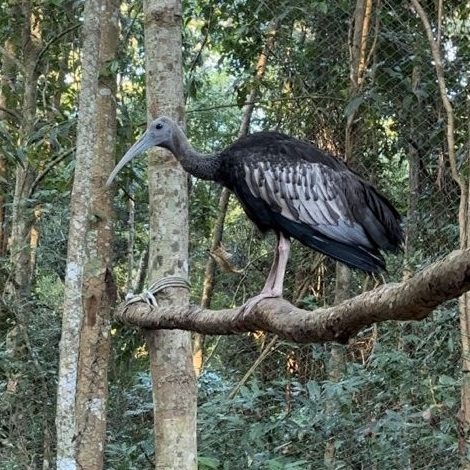
The giant ibis (Pseudibis gigantea) is a wading bird of the ibis family, Threskiornithidae. It is confined to northern Cambodia, with a few birds surviving in extreme southern Laos and a recent sighting in Yok Đôn National Park, Vietnam. It is sometimes placed in the genus Thaumatibis.
Update November 2025
We were recently contacted by our conservation partners WCS Cambodia that strong winds had blown down a Giant Ibis nest, causing a chick to fall to the ground and injure itself. Thankfully, a second chick, nearing fledging, remained safely in the tree and was unharmed. It is with help of local community members that population and nest monitoring of these Critically Endangered Giant Ibis, Cambodia’s national bird species, is possible.
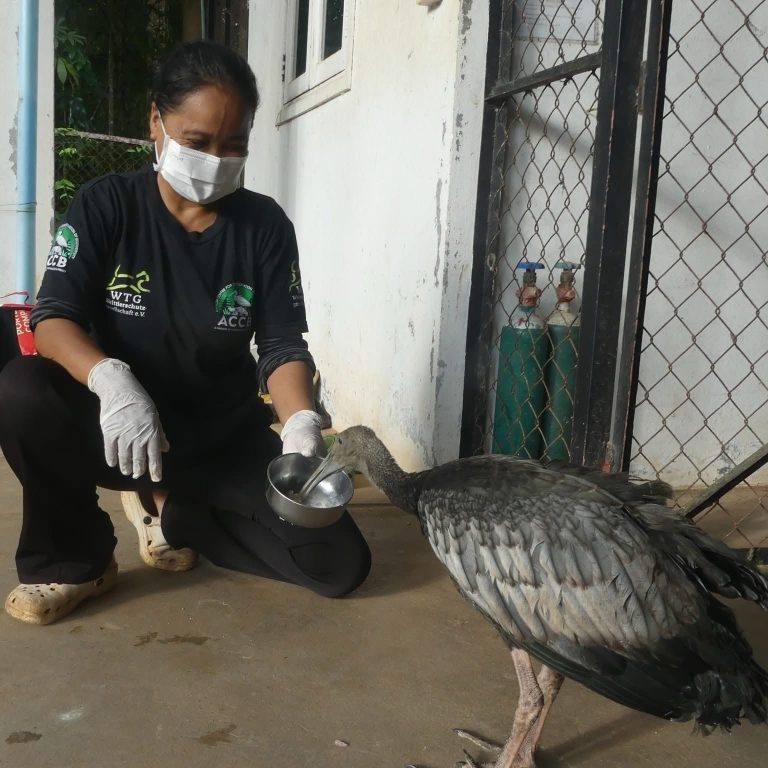
Our team coordinated with the team onsite to provide care recommendations and ensure the young bird was kept safe until we could reach the rescue location of the ibis in Preah Vihear province. Emergency medical treatment was provided before transporting the ibis to our conservation centre where it is undergoing further treatment and care. The young bird sustained a fractured wing and whilst his prognosis is guarded given the severity of his injury, and it’s possible he might never be able to fly properly, he is progressing well and beginning to heal.
With research from 2018 finding only around 290 Giant Ibis left in the wild, this chick is crucial to the survival of its species. Once its wing has healed, he will stay with us as part of our world-first breeding program dedicated to repopulating the wild population.
We would like to thank our partners and donors the Provincial Department of Environment of Preah Vihear, Wildlife Conservation Society Cambodia, and WTG e.V. | Welttierschutzgesellschaft without whom this rescue wouldn’t have been possible.
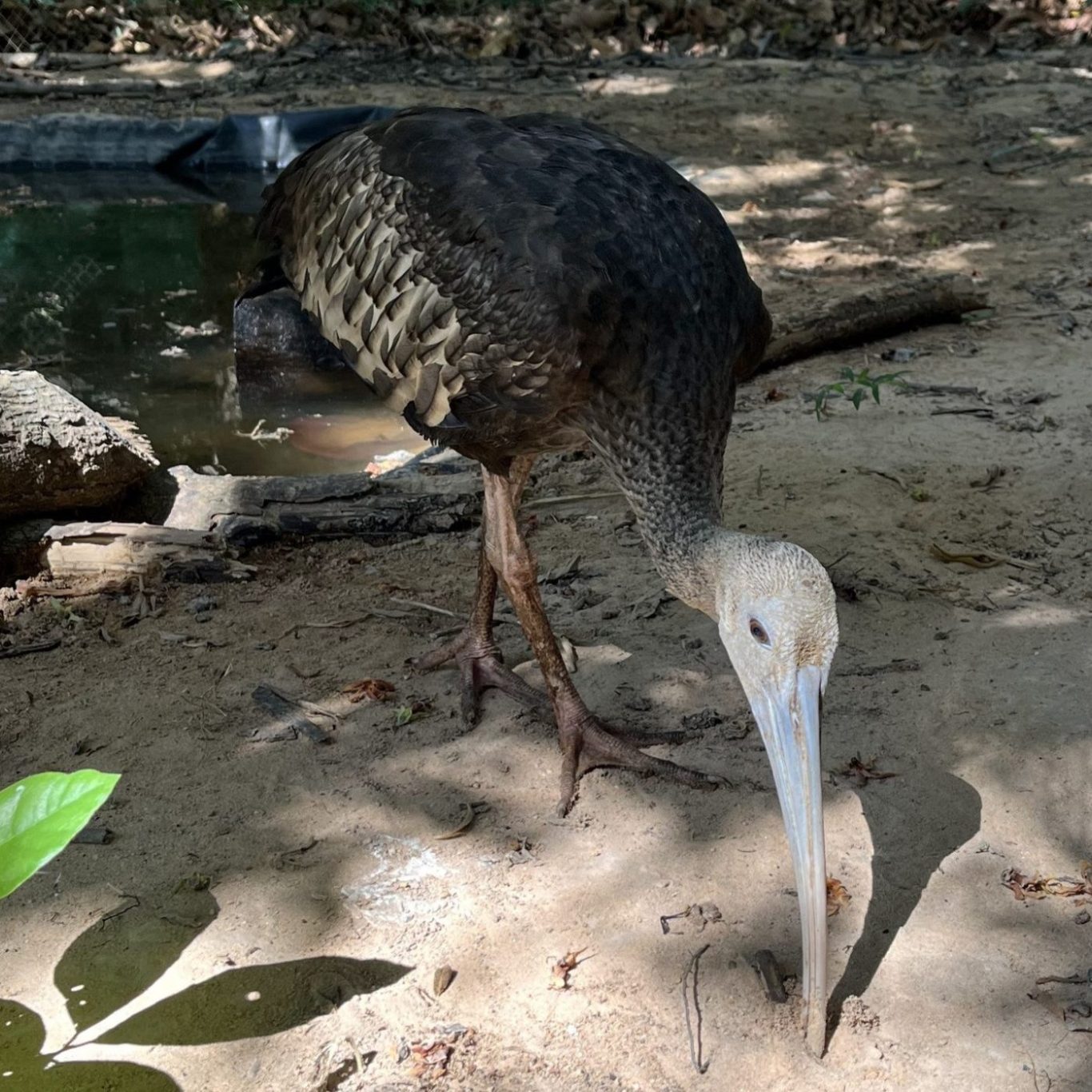
A young giant ibis (Pseudibis gigantea) has been rescued. This is a joint effort by the Cambodian Species Conservation Center of the Allwetterzoo Münster, the ACCB, the Wildlife Conservation Society (WCS), and the Cambodian Ministry of Environment of Preah Vihear Province.
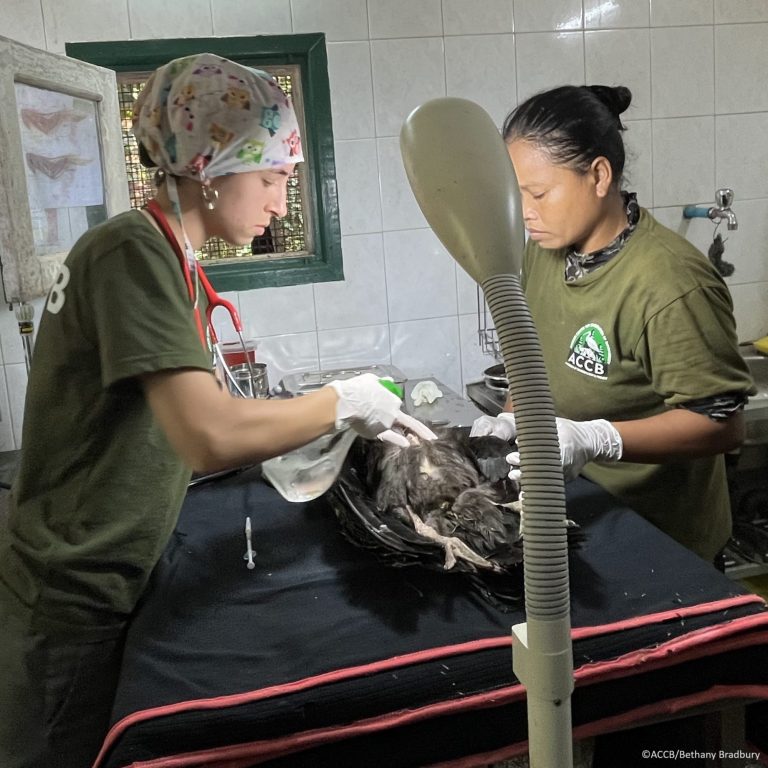
Although the ibis appeared healthy upon arrival at the Angkor Centre for Conservation of Biodiversity (ACCB), serious symptoms of illness began to develop. After a thorough examination by the ACCB team, it was determined that the young bird was suffering from avian malaria. Parasites were also found in its blood. Furthermore, one of the claws on its leg began to deteriorate. The disease threatened to become necrotic. This means that cells in the tissue die, usually followed by an inflammatory reaction. The inflammation can then spread throughout the body. The dedicated ACCB team worked tirelessly to combat malaria and also performed a successful claw removal surgery.
Of immense importance
The Allwetterzoo team is pleased that their colleagues' efforts paid off. The ibis is now healthy and has fully recovered. It has also adapted well to its new aviary on the ACCB grounds. Saving this animal is of enormous importance. There are only about 250 giant ibises left in the wild. The bird at the ACCB will play a crucial role in the conservation center's breeding population of giant ibises. In the long term, it will contribute to the conservation efforts of this species.
Breeding and Learning
A total of three of these endangered birds currently live at the ACCB. The plan is for their offspring to be released into the wild after successful rearing. However, little is known about the social, courtship, and breeding behavior of these shy birds. Therefore, the scientifically supported efforts of the conservation team are also of enormous importance for the remaining animals in the wild. Only with more knowledge about the species can protection and conservation measures be pursued in a targeted manner. The ACCB team is accordingly proud to be contributing to a sustainable future for these special birds.
First Sign of Life after 50 Years
Due to habitat loss, deforestation, and illegal hunting, the giant ibis was considered extinct for almost 50 years. In 2000, a camera trap captured a photo of it during a survey of Cambodia's forests and wetlands. What had become an almost mythical bird was actually nesting among humans.
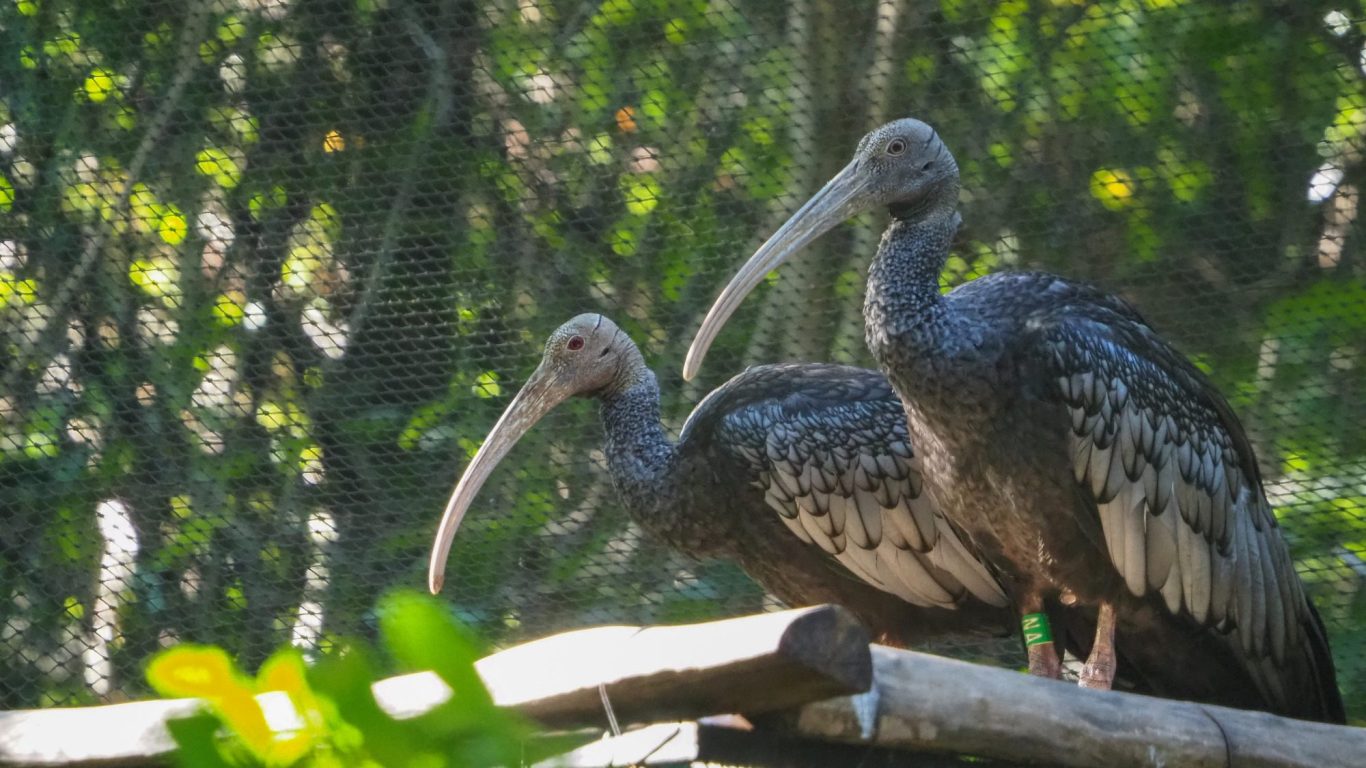
The Last Giant
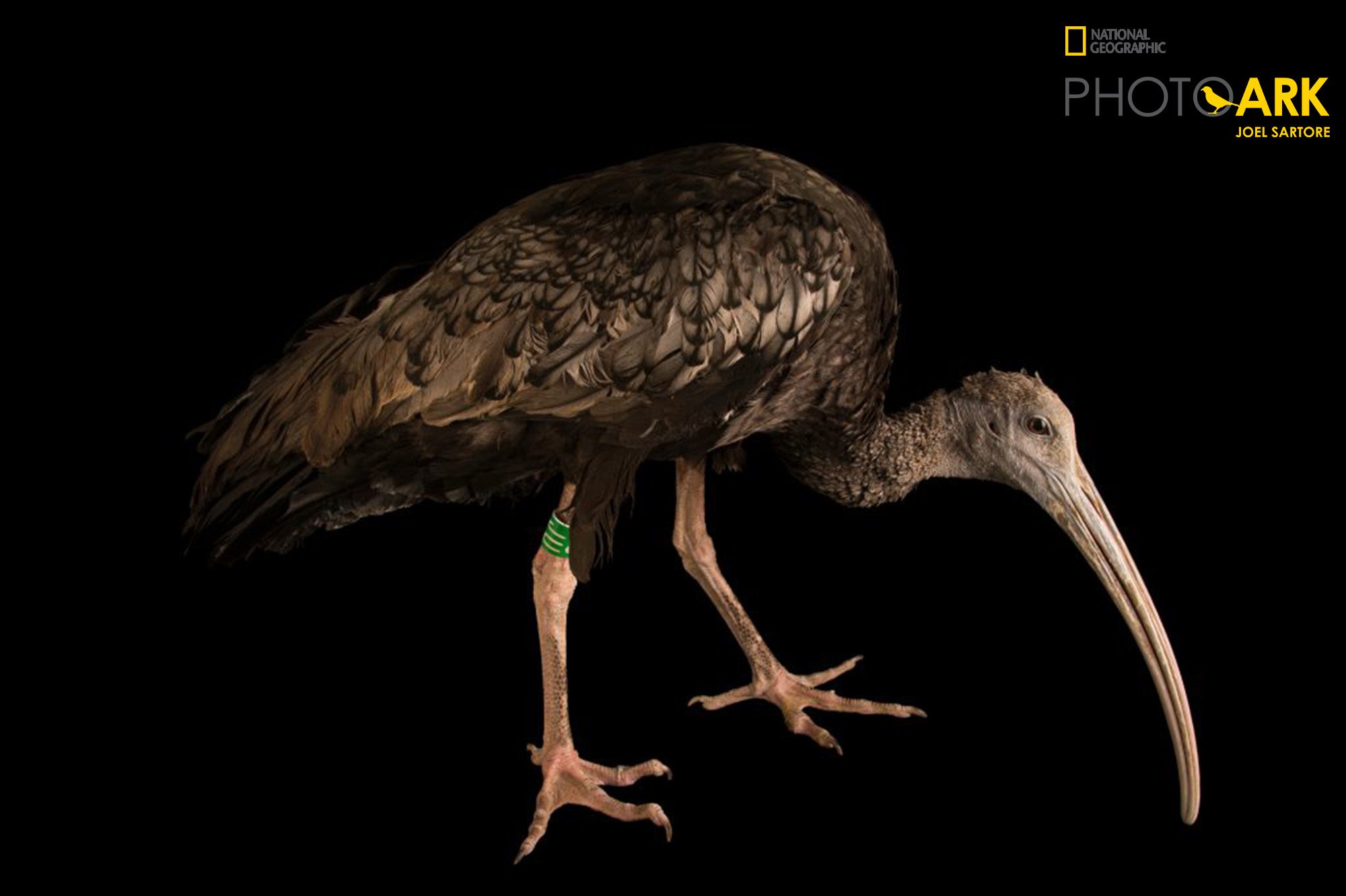
The endangered giant ibis is the largest ibis in the world. At 102–106 cm, it is significantly larger than the second-largest ibis species. Its plumage is predominantly brown, its bald head is gray, and its neck is narrowly banded with black. The legs are red, the curved beak is yellow-green, and the eyes are dark red. Juveniles have short black feathers on the back of the head, a shorter beak, and brown eyes. Their call is a loud "ä-lörk, ä-lörk," which is usually heard at sunrise and sunset. This species requires vast areas of intact lowland deciduous forests.
Unconventional breeding behavior
The giant ibis is naturally shy and feeds in remote pools far from villages. Unlike the other large waterbirds of Cambodia's northern plains, the giant ibis breeds during the rainy season. This is when the food supply of earthworms, eels, and frogs is particularly abundant. This species' habitat once extended across large parts of mainland Southeast Asia. But deforestation for agriculture has limited the last populations to northern and eastern Cambodia.
Your donation today is a direct investment in a future
where endangered species don't just survive, they thrive.
An entire habitat must be saved
ACCB and WCS (Wildlife Conservation Society) are working closely with the Cambodian government. Together, they aim to protect the species from extinction. The goal is not just to save Cambodia's national bird, but to preserve its entire habitat. According to the IUCN (International Union for Conservation of Nature) Red List, the giant ibis's habitat is home to 74 other species threatened with extinction.
Wir benötigen Ihre Zustimmung zum Laden der Übersetzungen
Wir nutzen einen Drittanbieter-Service, um den Inhalt der Website zu übersetzen, der möglicherweise Daten über Ihre Aktivitäten sammelt. Bitte überprüfen Sie die Details in der Datenschutzerklärung und akzeptieren Sie den Dienst, um die Übersetzungen zu sehen.