
Angkor Centre for Conservation of Biodiversity
Angkor Centre for Conservation of Biodiversity
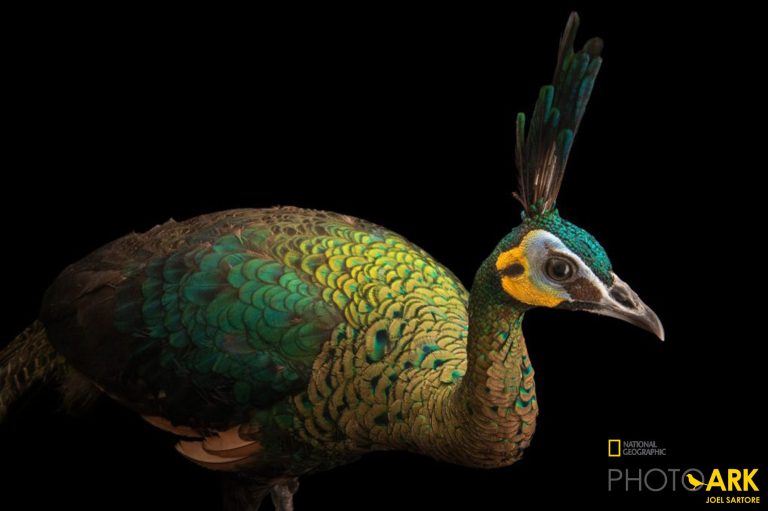
Green peafowl
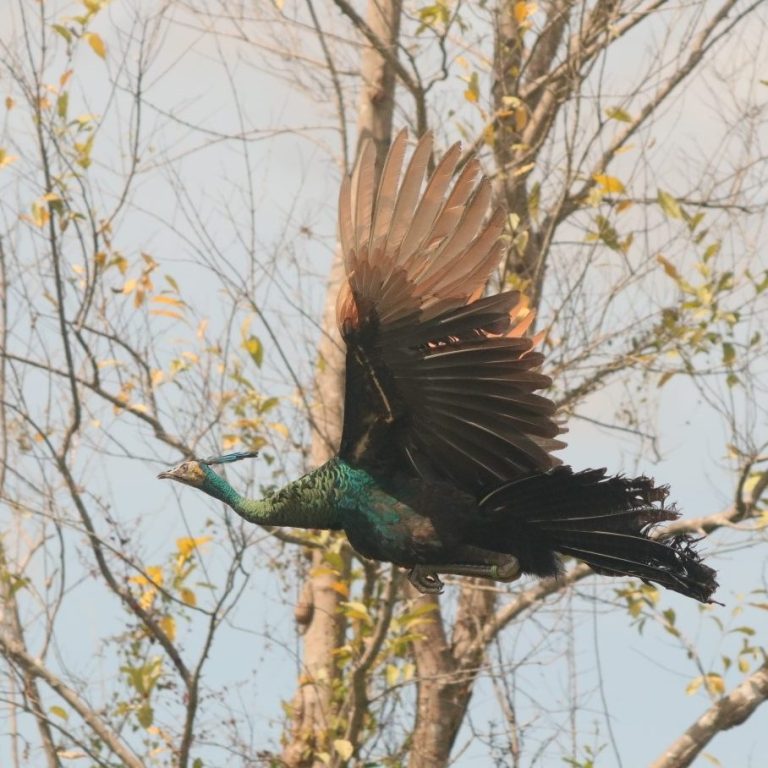
The green peafowl (Pavo muticus) is a peafowl species native to the tropical forests of Southeast Asia and Indochina. It is the national bird of Myanmar. Formerly common throughout Southeast Asia, only a few isolated populations survive in Cambodia and adjacent areas of Vietnam. It has been listed as endangered on the IUCN Red List since 2009. This is primarily due to widespread deforestation, agriculture and loss of suitable habitat, severely fragmenting populations and contributing to an overall decline in numbers. The green peafowl is in demand for private and home aviculture and threatened and targeted by the pet trade, feather collectors and hunters for meat.
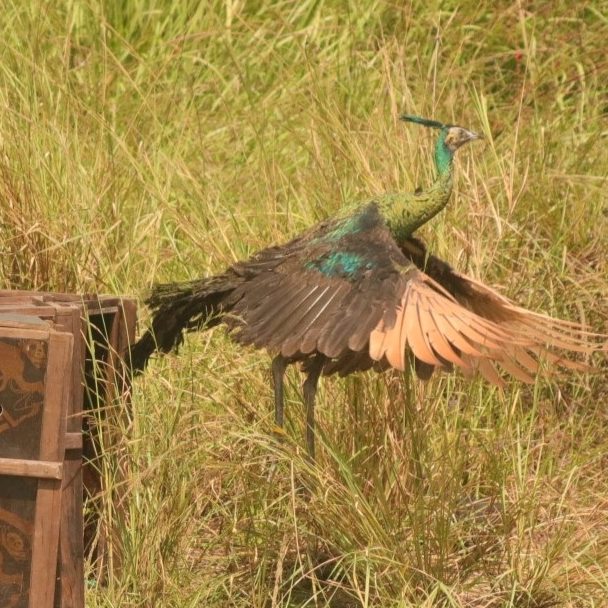
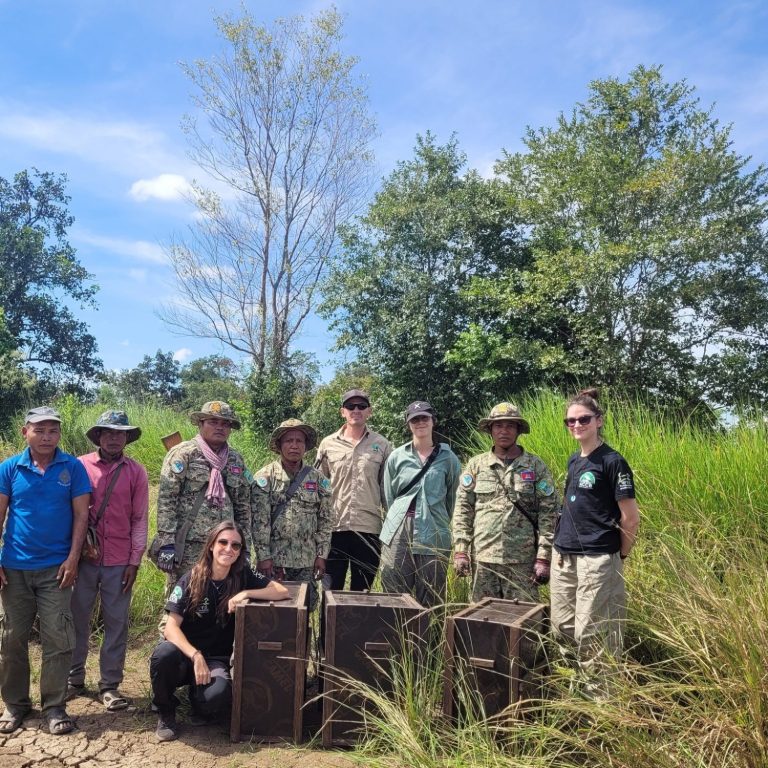
In Cambodia, as in many other places around the world, forests are disappearing, and with them their inhabitants. But there are glimmers of hope. In 2023, for example, there was encouraging news from the Northern Plains region. There, the team from the Angkor Centre for Conservation of Biodiversity (ACCB) released four endangered birds into the wild. The ACCB was supported by the Preah Vihear Provincial Department of Environment (PDoE) and the WCS Cambodia organization.
Breeding Our Own Captive Breeds
Three of the four released birds were young Indochinese Green Peacocks (Pavo muticus emperator). This is a globally endangered species that is successfully bred at the ACCB. In the current 2023 breeding season, several eggs were laid and successfully incubated. Six months later, they were ready to be released into the wild. The introduction of these birds is a crucial step toward restoring a healthy and secure population of this species.
The historical range of the Green Peacock once stretched from northeastern India and Bangladesh through Myanmar and southern China to Vietnam and Malaysia, as far as the island of Java. It was once considered the easiest species of the pheasant family to observe in Asia. Today, the Green Peacock is found only in a few small, isolated areas.
The International Union for Conservation of Nature (IUCN) lists this species as endangered on its Red List of Threatened Species. In August 2018, it estimated the total population at fewer than 20,000 individuals worldwide. Due to ongoing climate change and habitat loss, experts believe that the total number of individuals has continued to decline in recent years.
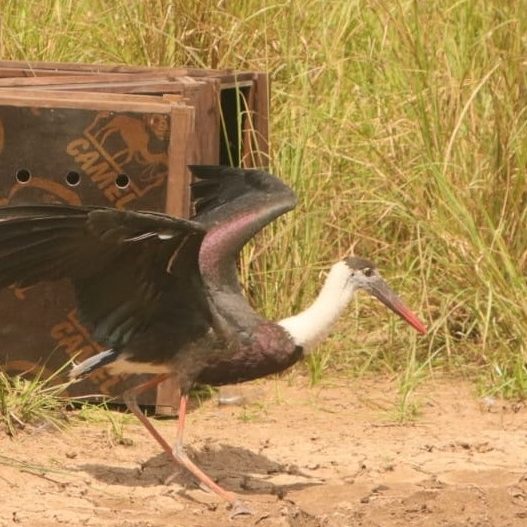
Rehabilitated and released into the wild
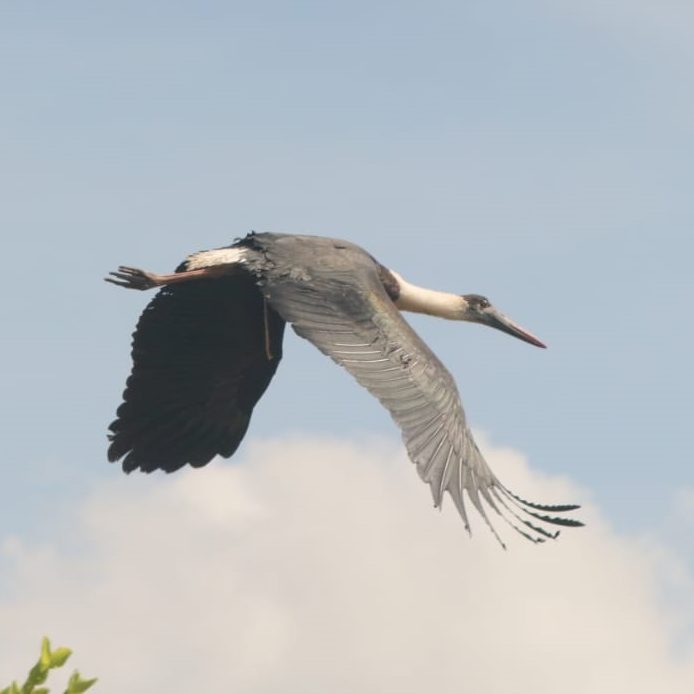
The fourth bird was an Asian Woolly-necked Stork (Ciconia episcopus). It is also threatened by habitat loss and hunting. The animal was rescued in September 2023 by the ACCB, WCS, and PDoE after being found injured and unable to fly. After veterinary care and rehabilitation, the Asian Woolly-necked Stork was released and, according to the ACCB team, flew away fully recovered.
Saving the species and habitat
To ensure that, among other things, the three peacocks do not return home in vain and that the Woolly-necked Stork receives medical care, there are numerous initiatives by the local Cambodian government and various NGOs committed to habitat conservation and combating poaching, with which the ACCB team successfully collaborates. Most recently, this year, the ACCB was proud and honored to have organized the "Zero-Snaring" campaign in Siem Reap Province, where the species conservation center is located.
"Snaring" refers to a special type of hunting using illegal wire traps. The simple traps made of wire, cable, rope, or nylon cord that poachers use daily to hunt are cheap and easy to set up. They make no distinction between the animals they target. Smaller mammals such as pangolins and monkeys end up in snares, but bears, elephants, and birds also step into the traps and die a painful death. According to the WWF, between 2010 and 2019, rangers discovered and removed more than 230,000 traps in several protected areas in Cambodia alone. However, studies estimate that rangers' patrols through difficult terrain result in fewer than 30 percent of the traps actually set being found. In Cambodia, the snaring crisis has reached a sad peak, as a WWF report from January 2022 shows.
Wir benötigen Ihre Zustimmung zum Laden der Übersetzungen
Wir nutzen einen Drittanbieter-Service, um den Inhalt der Website zu übersetzen, der möglicherweise Daten über Ihre Aktivitäten sammelt. Bitte überprüfen Sie die Details in der Datenschutzerklärung und akzeptieren Sie den Dienst, um die Übersetzungen zu sehen.