
Angkor Centre for Conservation of Biodiversity
Angkor Centre for Conservation of Biodiversity
Southern river terrapin
The southern river terrapin (Batagur affinis) is a riverine turtle of the family Geoemydidae found in Malaysia, Indonesia and Cambodia.
The threats to the species are diverse and all attributable to humans. These threats are either very direct, through the collection of animals and eggs for food, or indirectly, through habitat loss associated with deforestation, sand mining, and water pollution. So this species is not becoming extinct, but is being actively eradicated by us.
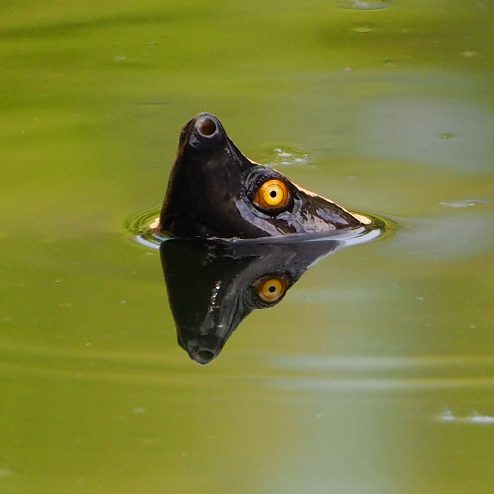
It is called the "Royal Turtle." It is Batagur affinis, the Southern River Turtle. Its natural habitat was limited to the larger river systems and estuaries of the Gulf of Thailand. The turtle's eggs are said to be so delicious that they were once considered a delicacy reserved only for the royal family. But this status did not save it from extinction. The joy of its rediscovery in 2001 was therefore all the greater. In Cambodia, where it was long considered extinct, it now occurs only in the Sre Ambel River system. The species is extremely rare, and its status is correspondingly high.
Two institutions - one goal
With the discovery, conservation measures were immediately initiated to protect the rediscovered specimens. Among other things, a population monitoring program was initiated. This is being carried out by the Wildlife Conservation Society (WCS) in cooperation with the local fisheries authority. The primary purpose of monitoring is to locate turtle nests – to protect them from poachers. Since 2006, eggs have been collected from the wild and brought to the specially established Koh Kong Reptile Conservation Center (KKRCC). Here, the eggs are incubated, the young are raised, and then returned to the river system.
The principle hasn't changed since then
If a nest is found in the wild, the eggs are collected, incubated at the center, and the young are raised. Only then are they returned to the wild. This increases breeding success. However, to ensure a healthy ex-situ population alongside the in-situ population, some animals from 2006 were not returned. In species conservation, ex-situ measures for the conservation of biodiversity are those that take place through the keeping of a species, for example, in zoos or species conservation centers. In-situ measures protect the species in its natural habitat. Most of the eggs collected in 2006 were successfully hatched, and the animals were raised under the protection of the KKRCC.
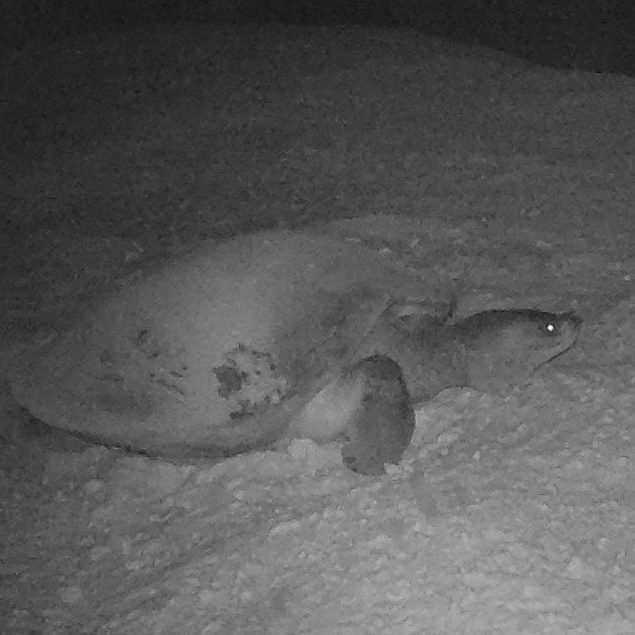
For safety reasons, and to further protect the species from extinction, the animals are now kept in two centers. In addition to the KKRCC, the Allwetterzoo's Species Conservation Center, the ACCB, has also been allowed to participate in the protection of these royal tortoises. The ACCB received its first tortoises in 2012. Shortly thereafter, in 2015, more animals arrived. Since then, the team has been waiting for the animals to finally reach sexual maturity and become willing to reproduce.
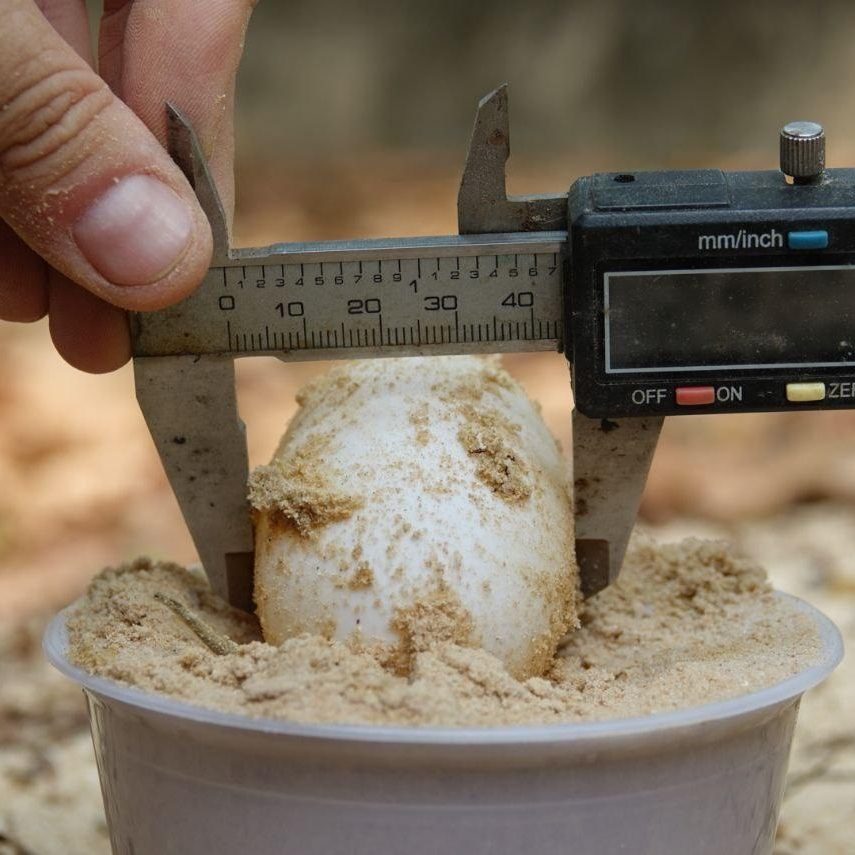
In March 2021, the long-awaited sensation occurred: several females at the KKRCC laid eggs for the first time. And shortly thereafter, the animals at the ACCB followed suit. The tracks in the sand already suggested this, but the analysis of the surveillance camera provided certainty. The images clearly showed a female digging in the sand and excavating a nest. The successful search in the sand immediately revealed several eggs. These were inspected, measured, and placed back in the nest. The Cambodian sun takes care of the incubation. The egg laying shows that the animals can reproduce independently in captivity. A total of 16 eggs were found at the ACCB.
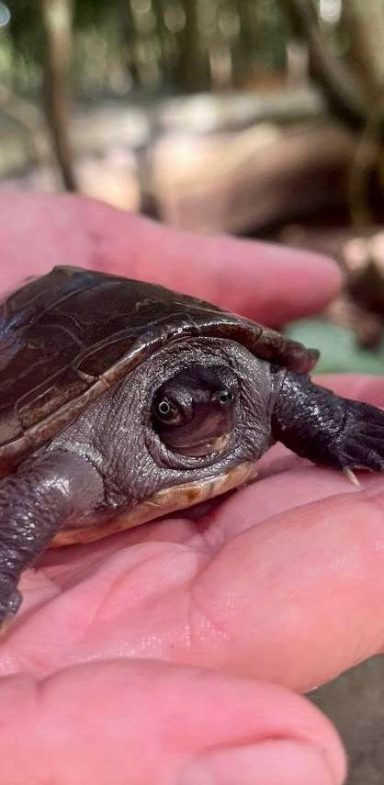
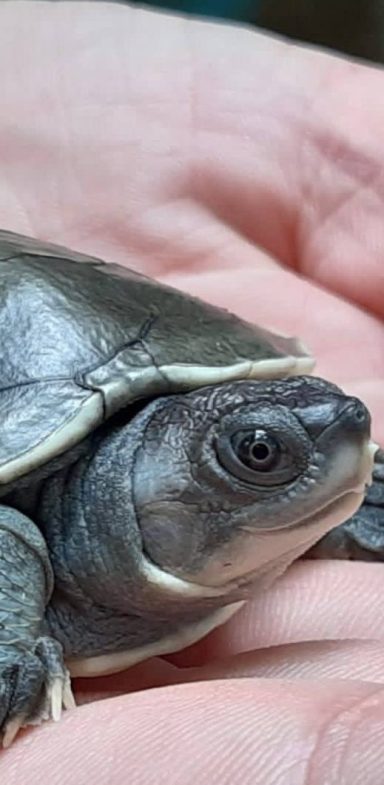
In 2023, the ACCB team succeeded in breeding Batagur affinis (edwardmolli) for the second time. This is the endangered southern river turtle, which is one of Cambodia's selected royal species. Like the other animals hatched at the ACCB so far, this specimen is currently part of the ACCB's ex situ population. This is intended to help strengthen the wild population of this species.
Wir benötigen Ihre Zustimmung zum Laden der Übersetzungen
Wir nutzen einen Drittanbieter-Service, um den Inhalt der Website zu übersetzen, der möglicherweise Daten über Ihre Aktivitäten sammelt. Bitte überprüfen Sie die Details in der Datenschutzerklärung und akzeptieren Sie den Dienst, um die Übersetzungen zu sehen.